Many boards approve massive budgets for AI projects they barely understand. Therefore, they miss the hidden risks quietly growing inside their organizations. You might think technology is the main hurdle for business innovation. However, the truth is quite different. AI Transformation
The reality is that AI transformation is a problem of governance. Algorithms rarely fail because of bad code. Instead, they fail because no one claims ownership of the outcome. Consequently, scattered departments deploy conflicting tools without any centralized strategy. This guide will show you exactly how to tackle this growing corporate crisis.
You will learn how to build a strong enterprise AI governance framework. In addition, we will cover step-by-step implementation tactics and risk management practices. Ultimately, you will discover how to safely guide your business through the age of intelligent automation.
What Does “AI Transformation Is a Problem of Governance” Mean?
Governance refers to the rules, accountability, and oversight governing business technology. Many leaders assume artificial intelligence simply requires better software. However, Deloitte data shows that 66% of board directors report limited AI knowledge. Therefore, the failure point is structural oversight rather than technical capability.
When we say AI transformation is a problem of governance, we mean the absence of control. Different departments buy different AI vendors. Thus, data silos form. Additionally, no one takes responsibility when a model hallucinates or makes a biased choice.
Who should care about this? Chief Information Officers and compliance teams must pay attention. Furthermore, board members and department heads need to understand these rules. Basically, anyone deploying machine learning tools must use a proper AI compliance strategy to stay safe.
Key Features of Enterprise AI Governance
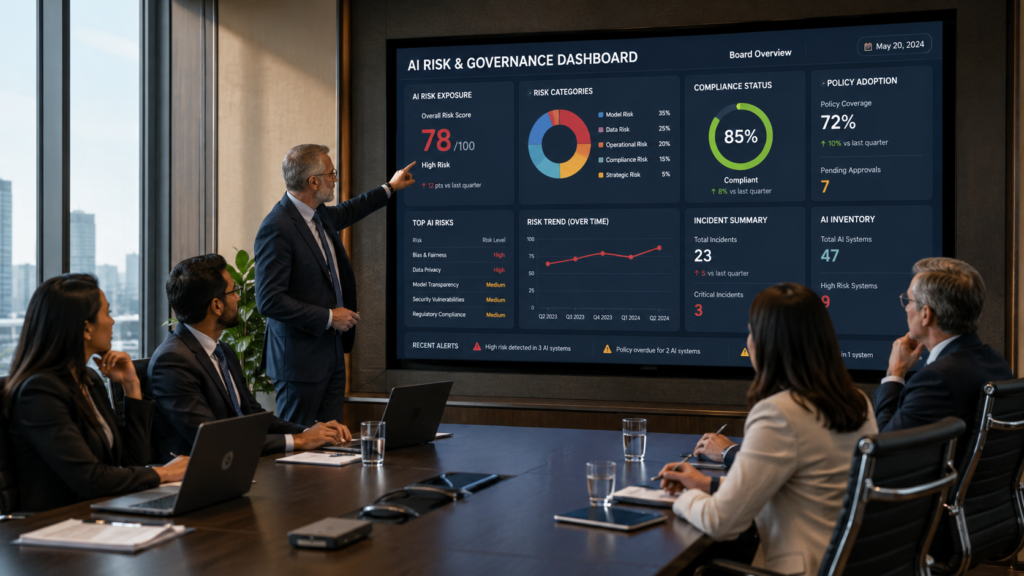
Good governance creates safe boundaries for fast innovation. Without it, you invite chaos into your networks. Therefore, a solid framework includes a few mandatory elements.
- Data Integrity: Your AI must use clean, ethically sourced data.
- Clear Ownership: Someone must take legal and operational responsibility for every model.
- Human-in-the-Loop: Critical decisions always require a human review before execution.
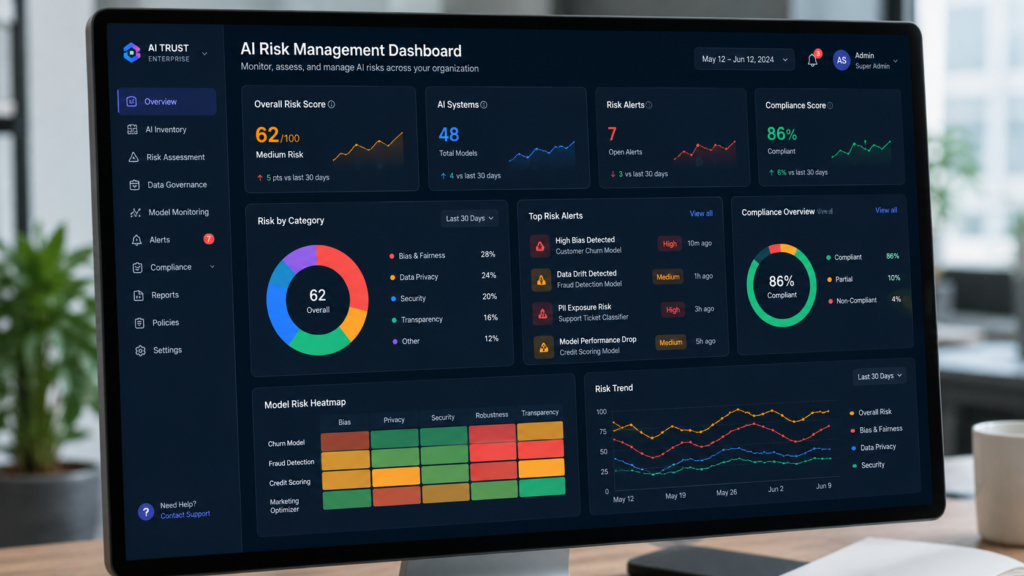
- Continuous Monitoring: Live dashboards must track AI performance and detect biases early.
- Shadow AI Control: You must track unapproved AI tools used secretly by employees.
Read our guide on mapping data structures
How to Fix Why AI Transformation Is a Problem of Governance (Step-by-Step)
Fixing this issue requires a strategic plan. You cannot just purchase a compliance tool and walk away. Instead, you must build a culture of accountability.
Step 1: Assign Clear Ownership
First, establish an AI oversight committee. You must separate this from general IT management. Give this group the power to approve or pause AI projects across the entire company.
Step 2: Categorize Your AI Risks
Next, map out every AI tool currently running. You should categorize them by risk level. For example, an AI writing marketing emails is low risk. Conversely, an AI approving loan applications is high risk.
Step 3: Implement Monitoring Dashboards
Finally, deploy software to watch your AI systems in real-time. You must catch performance drift immediately. Static quarterly reports simply move too slowly to catch sudden algorithmic errors.
Benefits and Use Cases of AI Risk Management
Proper oversight unlocks the true power of artificial intelligence. Businesses that manage risk well can scale their operations faster. Furthermore, they avoid expensive legal penalties.
For instance, consider a major healthcare provider using predictive AI. By enforcing strict data rules, they protect patient privacy. Consequently, they confidently use AI to forecast patient admission rates.
Another great example is the finance sector. Banks use AI compliance strategy frameworks to audit algorithms for racial bias. Therefore, they meet strict regulatory requirements while issuing loans safely.
Learn about our top enterprise compliance tools here
Pros and Cons of Strict AI Governance
Every business choice involves trade-offs. Implementing heavy oversight has clear advantages and some drawbacks. You must weigh these carefully.
Pros:
- Lower Legal Risk: You easily avoid regulatory fines and lawsuits.
- Higher Public Trust: Customers feel safe knowing humans monitor your AI.
- Stable Innovation: Developers innovate faster when they have clear safety guardrails.
Cons:
- Slower Deployments: Mandatory audits certainly delay project launch dates.
- Higher Costs: You must pay for monitoring software and skilled compliance staff.
- Internal Friction: Teams often hate adding new approval processes to their daily workflows.

Best Alternatives to Traditional IT Oversight
Traditional IT governance does not work for artificial intelligence. Software used to follow strict, unchanging rules. However, AI models learn and adapt continuously.
What should you use instead?
- Dynamic AI Frameworks: Use adaptive policies that update as the AI model evolves.
- Automated Compliance Software: Let specialized AI tools monitor your primary AI systems for compliance drifts.
- Cross-Functional Councils: Blend legal, HR, and technical experts into one agile decision-making team.
Discover 5 ways to build cross-functional teams
Common Mistakes to Avoid with Shadow AI
Shadow AI is a massive security threat. This happens when employees use free AI chatbots without permission. Often, they paste confidential company data into these public tools.
You must not ignore this behavior. Do not try to simply block every single AI website. Employees will always find a workaround. Instead, provide secure, company-approved AI alternatives. Furthermore, you must train your staff on data privacy rules.
For more context on international standards, you can read about the OECD Principles on Artificial Intelligence.
See our training modules on employee data privacy
Frequently Asked Questions (FAQs)
Why is AI transformation mainly a governance issue?
AI fails because of unclear ownership and siloed data. It rarely fails due to bad programming. Governance determines accountability.
How does shadow AI hurt a business?
Shadow AI exposes private company data to public servers. Consequently, it creates massive legal and security vulnerabilities.
What is human-in-the-loop oversight?
It means a human expert must review and approve an AI system’s choice. You use this for high-risk decisions.
Does governance slow down company innovation?
Initially, yes. However, clear rules eventually speed up safe deployments. Developers can build freely within established boundaries.
Taking Control of Your AI Journey
In short, AI transformation is a problem of governance that you cannot ignore. Companies face rising regulatory pressures and complex data challenges every day. Therefore, you must establish clear rules, accountability, and continuous monitoring now.
We highly recommend forming a dedicated AI oversight committee this week. Do not let unmanaged algorithms dictate your company’s future.
Ready to secure your business operations? Start mapping your internal AI usage today and build a stronger framework for tomorrow.