You launch a new marketing campaign and cross your fingers. You hope the leads will pour in quickly. However, hoping is not a strategy. You need to know exactly where your budget goes. Therefore, you must learn how to track campaign performance: a complete step-by-step guide.
Without proper tracking, you risk wasting valuable resources. Conversely, accurate data helps you scale winning ads. This guide will show you exactly how to measure your marketing success.
You will discover the step by step way to track campaigns effectively. We will cover the best tools to use right now. Furthermore, you will learn which metrics actually matter. As a result, you can stop guessing and start growing.
What is Campaign Performance Tracking?
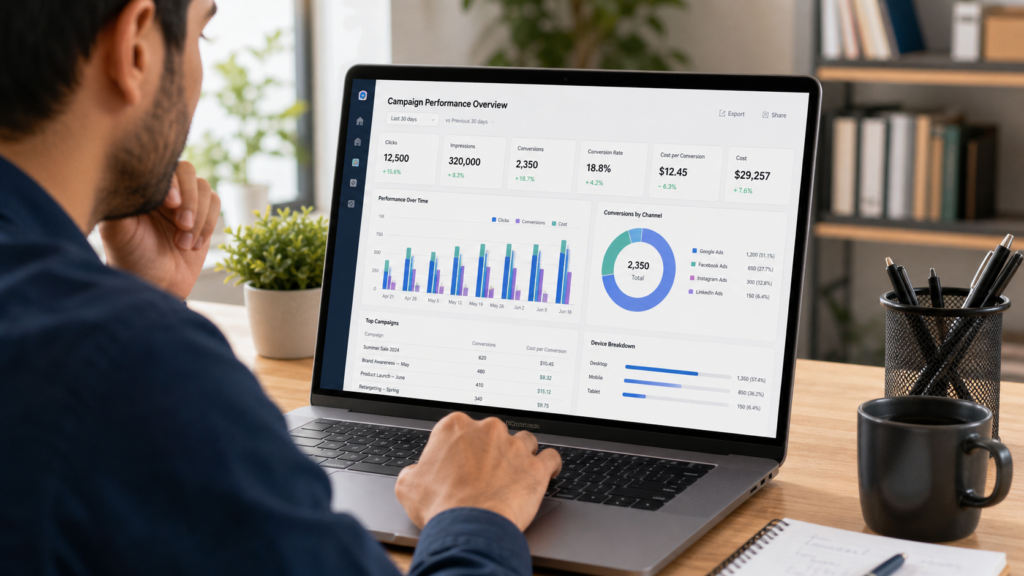
Campaign performance tracking is the process of measuring your marketing efforts. You collect data from various channels like social media or email. Then, you analyze this information to see what works.
This process helps you understand your return on investment (ROI). For example, it tells you if a Facebook ad generated actual sales. In other words, tracking connects your marketing spend directly to business revenue.
Who should use this process? Every business owner needs tracking. Marketing managers rely on it heavily. Freelance digital marketers must use it to prove their value. Ultimately, anyone spending money on ads needs a reliable tracking system.
[Internal Link: Guide to Marketing Analytics for Beginners]
Key Features of Campaign Performance Tracking
A solid tracking system includes several vital components. These features give you a complete picture of your marketing health.
- Real-time reporting: You can see data as it happens. Therefore, you can make quick adjustments.
- Multi-touch attribution: This tracks every step of the customer journey. It shows you exactly which ads led to a sale.
- Custom dashboards: You can view all your important metrics in one place.
- Goal tracking: You set specific targets and monitor your progress.
- Cost analysis: You can easily calculate your cost per lead or cost per click.
How to Track Campaign Performance: A Complete Step-by-Step Guide
Setting up your tracking might seem complicated. However, you can master it by following a clear process. Here is the step by step way to track campaigns successfully.
Step 1: Define Your Campaign Goals
First, you must know what you want to achieve. Do you want more website traffic? Are you trying to generate email leads? Perhaps you just want direct sales.
Write down your primary objective clearly. Consequently, you will know exactly which metrics to monitor. You cannot track success if you do not define it first.
Step 2: Choose Your Key Performance Indicators (KPIs)
Next, select the metrics that match your goals. These are your Key Performance Indicators. For instance, track click-through rates if you want traffic.
Track conversion rates if you want sales. Monitor your cost per acquisition to ensure profitability. Keeping your KPIs simple prevents data overwhelm.
Step 3: Implement Tracking Codes and Pixels
You must install tracking codes on your website. Google Analytics uses a specific tracking tag. Facebook uses a tracking pixel.
Place these codes on every page of your site. As a result, the platforms can monitor user behavior. This step is crucial for gathering accurate data.
For official documentation on setting up web tracking, you can review the Google Analytics Official Support Guide
Step 4: Use UTM Parameters for Your Links
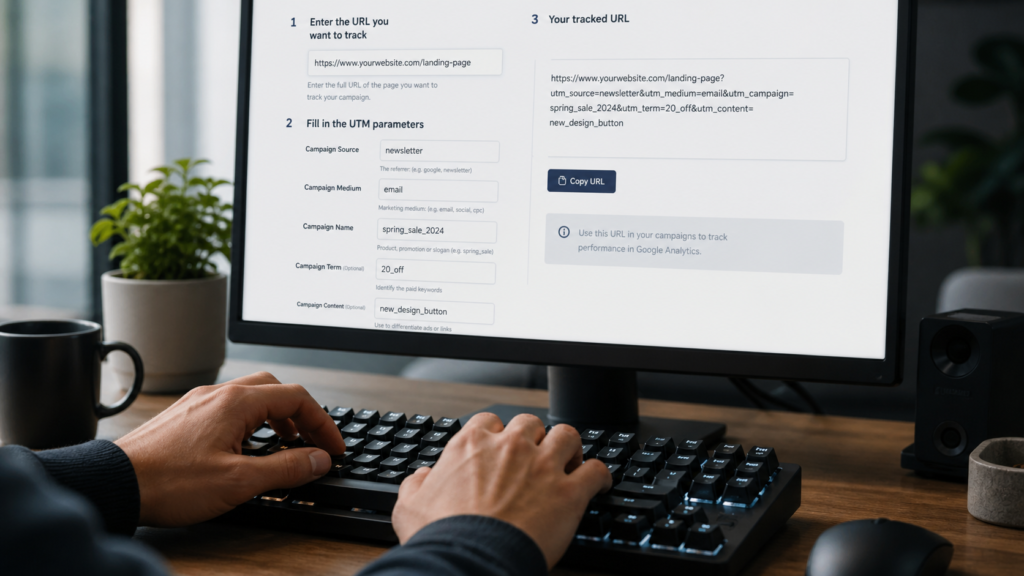
UTM parameters are special text tags added to your links. They tell your analytics tool exactly where traffic comes from. For example, they show if a click came from an email or a tweet.
Always use a URL builder to create these links. Thus, you ensure your data remains clean and organized. Consistency is key when using UTM codes.
Step 5: Connect Your CRM and Analytics
Your website data needs to talk to your sales data. Therefore, integrate your Customer Relationship Management (CRM) software with your analytics.
This connection shows you the full picture. You can see which ads generate the highest paying customers. Furthermore, you can identify which leads waste your sales team’s time.
Step 6: Create a Centralized Reporting Dashboard
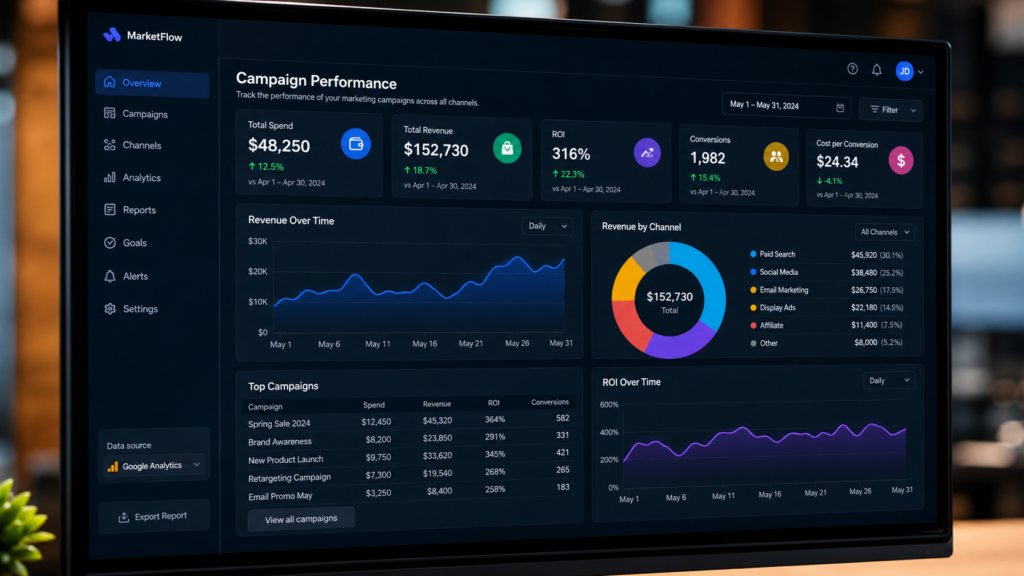
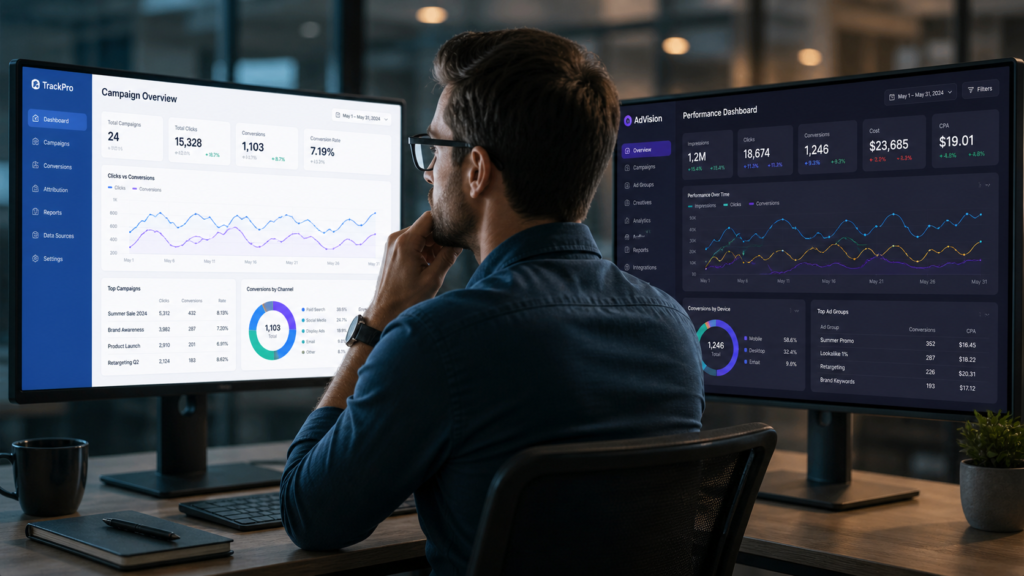
You do not want to check five different platforms daily. Instead, build one central dashboard. Tools like Looker Studio can combine data from multiple sources.
Customize this dashboard to show only your KPIs. As a result, you save time when reviewing your campaign performance.
How to Build a Custom Marketing Dashboard
Step 7: Analyze the Data and Optimize
Finally, you must review your data regularly. Look for trends and patterns in the numbers. Are mobile users converting faster than desktop users?
Identify your worst-performing ads and pause them. Meanwhile, increase the budget on your best ads. This continuous optimization drives massive marketing growth.
Benefits and Use Cases
Tracking your marketing brings massive advantages to your business. Let us look at some practical benefits and use cases.
First, tracking saves you money. You can quickly identify failing campaigns. Therefore, you stop wasting budget on ads that do not work.
Second, it improves your messaging. You can test two different headlines to see which gets more clicks. As a result, you learn exactly what your audience wants to read.
Consider a real-life example of a local gym. They ran ads on both Google and Facebook. Initially, they thought Facebook was better because it drove more clicks.
However, their tracking system revealed a different story. The Google ads actually resulted in more gym memberships. Consequently, they shifted their budget to Google and doubled their revenue.
Case Study: How Data Improved Ad ROI by 200%

Pros and Cons of Campaign Tracking
Every system has its strong points and weak points. You should understand both sides of campaign tracking. Here is an honest analysis.
Pros:
- You make decisions based on facts, not feelings.
- You can easily prove your marketing ROI to your boss or clients.
- It helps you discover highly profitable audience segments.
- You can automate your reports to save time.
Cons:
- Setting up tracking codes can be highly technical for beginners.
- Privacy laws like GDPR make tracking more complicated today.
- Software subscriptions can become expensive for small businesses.
- Too much data can lead to analysis paralysis.
Best Alternatives for Campaign Tracking Tools
You have many software options for tracking performance. If you want to explore different tools, consider these excellent alternatives.
1. Google Analytics 4 (GA4):
This is the industry standard. It is completely free to use. Furthermore, it integrates perfectly with Google Ads. However, the interface can be confusing for new users.
2. HubSpot:
HubSpot offers an incredible all-in-one solution. It tracks everything from the first ad click to the final sale. In addition, it includes a powerful CRM. The main downside is the high monthly cost for premium features.
3. Mixpanel:
Mixpanel focuses heavily on user behavior. It tracks exactly what people do inside your app or website. Therefore, it is perfect for software companies. It is highly advanced but requires technical setup.
The Top 5 Marketing Analytics Tools Compared
Common Mistakes to Avoid
Many marketers fail at tracking because of simple errors. You can succeed by avoiding these common mistakes.
First, do not track too many metrics. Focusing on vanity metrics like “likes” will distract you. Instead, focus strictly on leads and revenue.
Second, never launch an ad without testing your links. A broken tracking link ruins your data completely. Always click your own ads to ensure the pixel fires correctly.
Third, avoid making hasty decisions. Some campaigns need a few days to optimize. Therefore, do not pause an ad after just four hours. Give the algorithm time to find your ideal customer.
Finally, do not ignore privacy policies. You must tell your visitors that you track them. Implement a proper cookie consent banner to stay legally compliant.
FAQs
What is the best metric to track for a new campaign?
Return on Ad Spend (ROAS) is generally the best metric. It tells you exactly how much money you made compared to what you spent. If your goal is traffic, focus on your Cost Per Click (CPC).
Can I track campaigns for free?
Yes, you absolutely can. Tools like Google Analytics and Google Search Console are completely free. They provide enough data for most small to medium businesses to succeed.
How often should I check my campaign performance?
You should check your daily spend and major alerts every morning. However, you should do deep analysis only once a week. Checking too often leads to emotional, impulsive decisions.
What is a UTM parameter?
A UTM parameter is a snippet of text added to the end of a link. It tells your analytics software where a visitor came from. For instance, it identifies if a user clicked a link in a specific email newsletter.
Why does my Facebook data not match my Google Analytics data?
These platforms use different attribution models. Facebook might take credit for a view, while Google only counts clicks. Therefore, the numbers rarely match perfectly. Use Google Analytics as your primary source of truth.
Start Tracking Your Success Today
We have explored exactly how to track campaign performance: a complete step-by-step guide. You now understand the essential metrics and tools required for success.
First, define your goals and choose your KPIs carefully. Then, implement your tracking codes and UTM parameters. Finally, analyze your data weekly to optimize your budget.
When you follow this step by step way to track campaigns, you eliminate the guesswork. You will quickly discover which marketing channels actually drive revenue.