Do you want to scale your business without doubling your internal sales team? You might feel stuck trying to reach new markets alone. Therefore, building a network of trusted partners can solve this problem. In this post, you will learn exactly how to build and launch a profitable partner network. This channel marketing strategy: a complete guide for beginners will show you the exact steps to succeed.
Channel marketing allows you to sell through third-party partners. As a result, you reach customers who already trust these local businesses. You will learn the key features, steps, and benefits of this approach. Furthermore, we will cover common mistakes so you can avoid them entirely.
What is a Channel Marketing Strategy: A Complete Guide for Beginners?
A channel marketing strategy is a structured plan to sell products through third parties. These intermediaries act as an extension of your brand. For example, they can include retailers, distributors, affiliates, or independent agents.
Instead of selling directly to consumers, you collaborate with these partners. They handle the local promotions and direct customer interactions. Consequently, your brand reaches new audiences much faster.
This approach works best for growing businesses. Manufacturers, software companies, and service providers use it daily. You should use channel marketing if you want to expand into new geographic areas. Additionally, it helps companies that want to lower their direct customer acquisition costs.

Key Features of Channel Marketing
A successful channel marketing plan includes several core components. Therefore, you must understand these features before launching your program.
- Market Development Funds (MDF): Brands give money to partners to fund local marketing efforts.
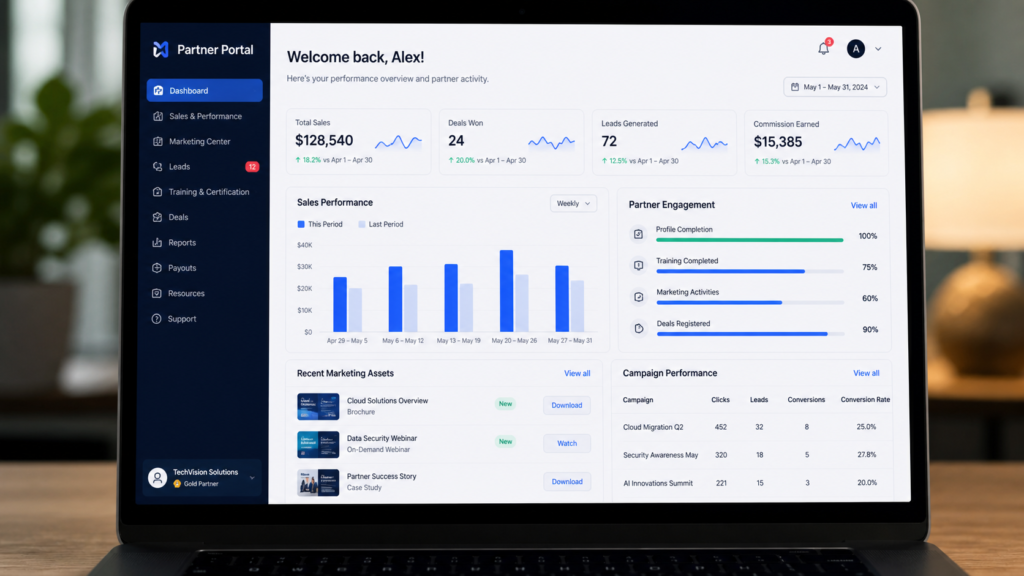
- Partner Portals: Companies use software to manage assets, track sales, and train affiliates.
- Co-Branded Assets: Vendors provide ready-to-use templates. Partners can quickly add their logos to these materials.
- Performance Tracking: You must track metrics like sales volume and partner engagement.
- Incentive Programs: Brands reward top-performing partners with bonuses or higher commissions.
Read our guide on Market Development Funds
How to Use a Channel Marketing Strategy (Step-by-Step Guide)
Building your partner network requires careful planning. Therefore, follow this step-by-step guide to launch your program successfully.
Step 1: Define Your Goals and Target Audience
First, you need clear objectives. Determine if you want to enter a new region or increase overall sales volume. Next, identify your ideal customer profile. You must understand where these customers currently shop. As a result, you will know exactly which types of partners to target.
Step 2: Recruit the Right Partners
You must find businesses that align with your brand values. Look for partners who already serve your target audience. For instance, a software company might partner with IT consultants. Evaluate their past performance and local reputation. Finally, create a clear agreement that outlines commissions and expectations.
Step 3: Provide Training and Marketing Assets
Your partners need the right tools to sell your product. Therefore, create a comprehensive onboarding program. Provide product training sessions and clear sales guidelines. Additionally, upload pre-approved marketing templates to a shared partner portal.
Step 4: Launch Co-Marketing Campaigns
Work together with your partners to launch local campaigns. Use market development funds to support their advertising costs. For example, you might fund a local event or a targeted digital ad campaign. Monitor the campaign closely to ensure brand guidelines are met.
Step 5: Measure and Optimize Performance
You must track your results continuously. Use key performance indicators like partner engagement and total sales volume. Identify which partners perform best and analyze their tactics. Consequently, you can train underperforming partners using these successful methods.
Benefits and Real-Life Use Cases
Channel marketing offers incredible advantages for growing brands. First, it greatly expands your market reach. Partners bring established local relationships that you lack. Thus, you gain instant credibility in new markets.
Secondly, this strategy reduces your operational costs. You do not need to hire a massive internal sales team. Your partners absorb many of the direct selling expenses. Furthermore, it allows you to scale rapidly across different regions.
Consider a real-life example from the automotive industry. Large car manufacturers like Ford do not sell directly to buyers. Instead, they use a network of local dealerships. These dealers understand their specific local markets. They run regional ads, offer test drives, and close the sales.
Another great example is the software industry. Tech giants often use resellers and managed service providers. Learn more about business channels on Wikipedia . These partners bundle the software with their own IT services. Consequently, the software company reaches clients they would never find alone.
Pros and Cons
Like any business model, channel marketing has distinct advantages and disadvantages. You must weigh these factors honestly.
Pros:
- Rapid market expansion into new territories.
- Lower internal sales and marketing costs.
- Increased brand trust through local partner credibility.
- Ability to scale operations quickly without massive hiring.
Cons:
- Less control over the final customer experience.
- Lower profit margins per sale due to partner commissions.
- Risk of partners representing the brand poorly.
- Requires significant time to recruit and train partners.
How to maintain brand compliance with partners

Best Alternatives to Channel Marketing
If channel marketing does not fit your goals, consider these alternatives. Each offers a different way to reach your customers.
Direct-to-Consumer (DTC) Marketing
You sell directly to the end user without any middlemen. You keep all the profit margins. However, you bear all the marketing and distribution costs. This works best for highly specialized niche products.
Inbound Marketing
You attract customers directly to your website through content. This includes writing blogs, creating videos, and optimizing for search engines. Therefore, you build your own audience over time. It requires patience but yields high long-term returns.
Outbound Enterprise Sales
You build an internal team of sales representatives. They cold call and email potential clients directly. This strategy works very well for expensive, complex business software.
Inbound vs. Outbound Marketing Comparison
Common Mistakes to Avoid
Many companies fail when building their partner networks. Therefore, you must avoid these common pitfalls to ensure success.
First, do not ignore partner training. If partners do not understand your product, they will not sell it. You must provide ongoing education and clear sales materials.
Secondly, avoid creating complex commission structures. Partners want to know exactly how they earn money. If your payout rules confuse them, they will sell a competitor’s product instead. Keep your incentives simple and transparent.
Finally, do not neglect communication. You cannot simply sign a partner and forget about them. You must hold regular check-ins. Thus, you build strong, lasting relationships that drive consistent revenue.

FAQs
What is the difference between direct marketing and channel marketing?
Direct marketing targets the end consumer directly. Conversely, channel marketing uses third-party businesses to sell your products to the consumer.
How much should I pay my channel partners?
Commissions vary wildly by industry. Software affiliates might earn 20% to 30% per sale. However, retail distributors usually operate on wholesale discounts. You must research your specific competitors.
What software do I need for channel marketing?
You should invest in a Partner Relationship Management (PRM) platform. This software helps you distribute marketing assets, track partner sales, and calculate commissions accurately.How long does it take to see results?
Building a partner network takes time. You usually need three to six months to recruit, train, and launch your first partners.